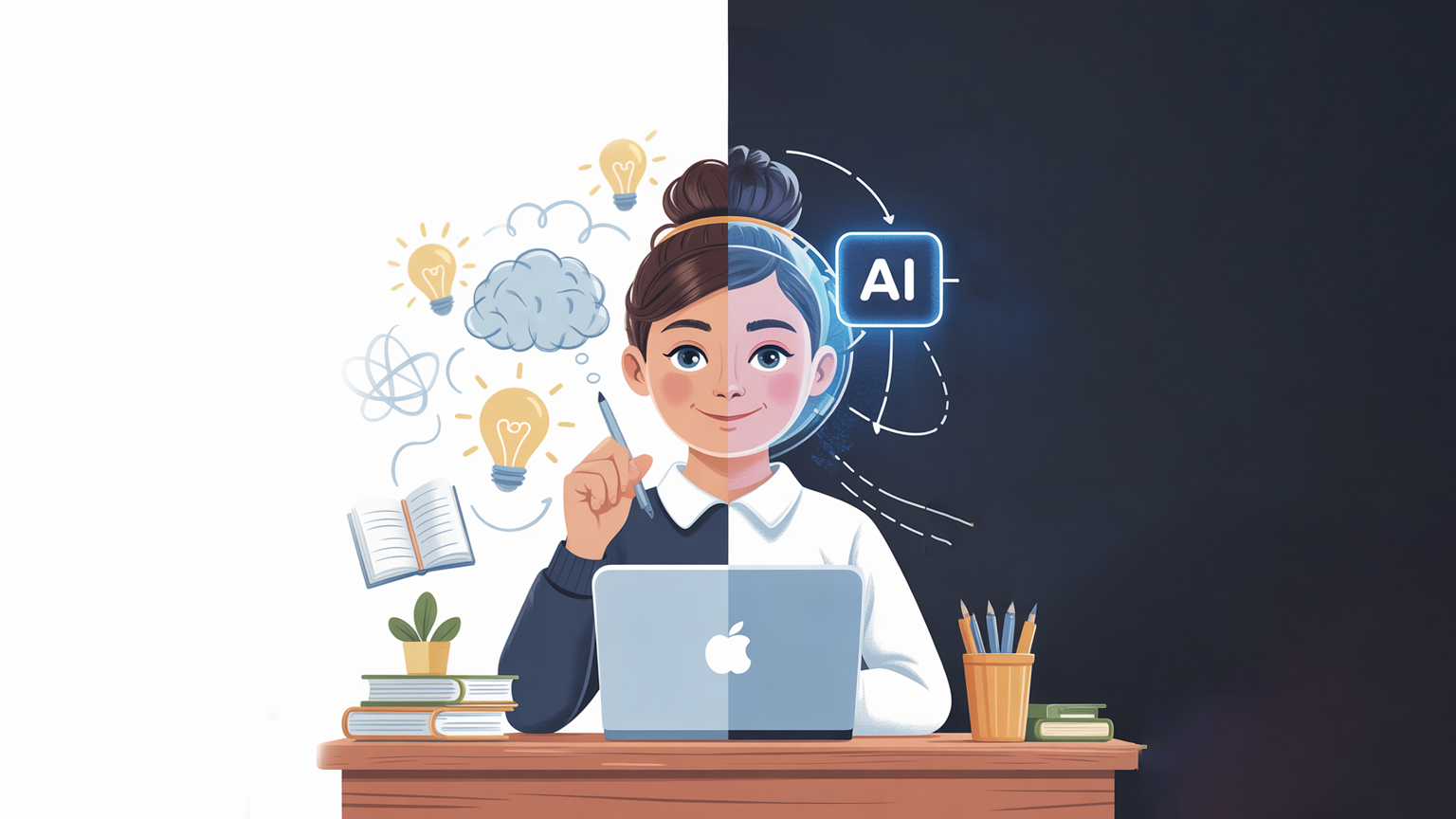
The Right Way to Use AI as a Student, Without Becoming Dependent
Artificial intelligence has quickly become a part of how many students study, research, and complete assignments. Tools like ChatGPT and Gemini can explain complex topics, summarise long articles, generate ideas, and even help draft essays. For students juggling multiple subjects and deadlines, these tools can feel like a powerful shortcut.
But like any powerful tool, the way you use it matters.
AI can either strengthen your learning or quietly weaken it. The difference lies in whether it supports your thinking or replaces it.
AI Should Assist Learning, Not Replace It
One of the biggest risks students face today is using AI as a substitute for understanding. If you simply copy answers, generate assignments entirely through AI, or rely on it to solve every problem, you may finish your work faster but learn far less.
Education is not only about completing tasks. It is about building the ability to think, analyse, and solve problems independently.
For example, if a student asks an AI tool to solve a programming problem and directly submits the generated code, they might pass the assignment. But when they face a similar question in an interview or exam, the lack of understanding quickly becomes visible.
A better approach is to use AI as a guide rather than a replacement. Instead of asking it to solve everything, ask it to explain concepts or break down steps. This way, the technology supports your learning instead of bypassing it.
Use AI to Clarify, Not Just Generate
One of the most effective ways to use AI is for clarification. Many students struggle because textbooks or lectures sometimes move too quickly or explain ideas in complicated ways.
AI tools can help simplify these concepts.
For example, instead of asking an AI tool to write an entire assignment, a student might ask:
“Explain the concept of cloud computing in simple terms with one real-world example.”
Or while studying networking, a learner might ask:
“What is the difference between a router and a switch? Explain it as if I am preparing for an interview.”
These kinds of prompts encourage understanding rather than replacing the learning process.
Treat AI as a Practice Partner
AI can also be a useful practice companion. Students preparing for interviews, presentations, or exams can use it to simulate real scenarios.
For instance, someone preparing for a technical interview might ask an AI tool to generate common questions for a service desk role. They can then practice answering those questions themselves.
Similarly, a student working on communication skills could ask AI to review a written email and suggest improvements in tone or clarity.
Used this way, AI becomes a training partner rather than a shortcut.
Always Question the Output
Another important habit is verifying what AI produces. AI systems generate responses based on patterns in data, which means they can occasionally produce outdated or incorrect information.
Students should treat AI responses as starting points rather than final answers.
Cross-checking facts through textbooks, academic sources, or credible websites ensures that the information is accurate. This habit also strengthens critical thinking, which remains one of the most valuable academic and professional skills.
Balance Technology with Independent Thinking
The most successful students will be those who learn to balance technology with independent effort.
Use AI to:
- simplify difficult topics
- brainstorm ideas
- practice interviews or presentations
- summarise large amounts of information
But also spend time solving problems yourself, writing your own explanations, and developing your own perspective.
Those activities build the cognitive skills that employers and universities value most.
The Real Advantage
AI is becoming a regular part of education and work. Ignoring it is not practical, but depending on it completely is also risky.
The real advantage lies in learning how to use it thoughtfully.
Students who use AI to support their thinking will gain speed and efficiency. Students who allow AI to replace their thinking may complete tasks quickly but struggle when real understanding is required.
Technology will continue to evolve, but the ability to think clearly, learn independently, and apply knowledge will always remain valuable.
AI can help you get there, as long as you remain in control of the learning process.